
I like to think of natural silence as the canvas upon which other sounds are painted. (Dr. Timothy C Mullet)
Pippyg2 news by Apodemus!
https://www.apodemus.eu/en/Apodemus-Pippyg2/00147
The new Pippyg2 standalone recorder was released a few days ago, replacing the previous Pippyg.
I had the opportunity to test it along with its dedicated sturdy, waterproof protection bag, which includes a cone with a water-resistant filter. https://www.apodemus.eu/en/Apodemus-Pippyg2/00147
On this page, I’ll present the results of my tests, comparing the new Pippyg2 to the previous Pippyg. I also compared them to Audiomoth’s first model, testing all three simultaneously.
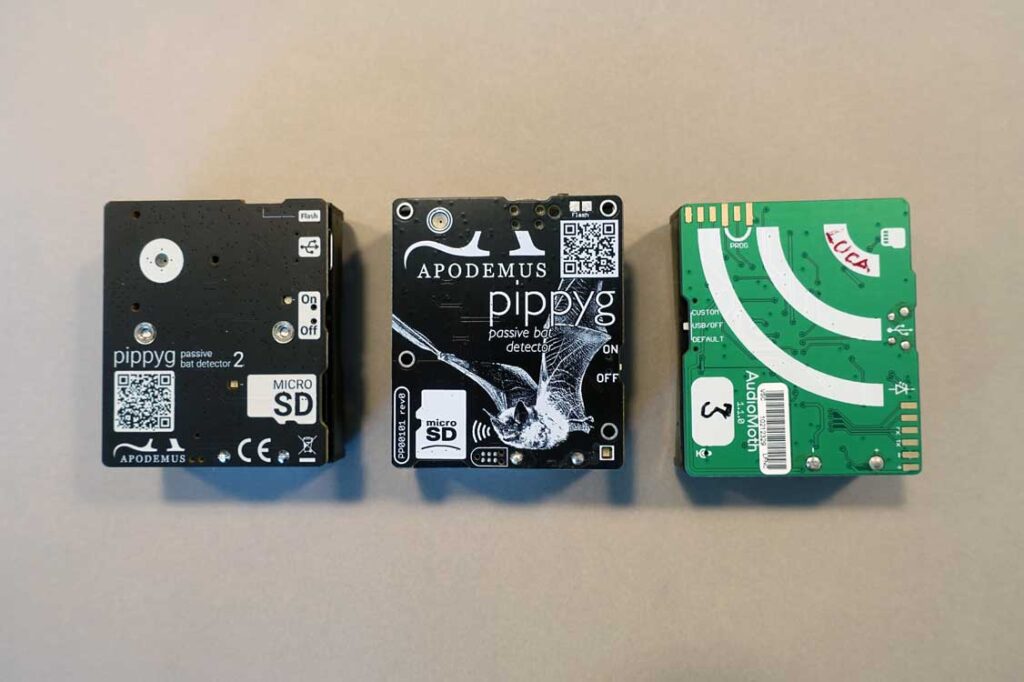
Pippyg2 – Pippyg – Audiomoth
Here the Pippyg2 in detail:
– Combined both audible and ultrasound recorder plus microphone (via USB-C): not only record, but also detect ultrasound in real time.
– Low noise floor (-110 dBFS/√Hz to 110 kHz) – faint, distant calls stay usable instead of buried in hiss.
– Flat acoustic response (within ±6 dB from 2.5 to 125 kHz) – providing you with unbiased information.
– Increased trigger sensitivity: four basic settings in the app, more detailed settings via the extended configuration.
– Addon “Bat Bag” available, with acoustically optimized horn and membrane – giving you a weatherproof mounting method for the recorder.
– Multiple recording windows: record birds by day, and bats by night for example.
– Lower power consumption: up to 45% longer life with the same batteries and settings.
– GUANO + config file logging: your recordings stay traceable and reproducible for publication.
– Extended configurability. Use an configuration file on your SD card to fine-tune the details and ensure consistency
For convenience in some parts I will use the terms Pip1 and Pip2 as abbreviations.
I tested both the ultrasonic part through practical tests on bat signals, and the audible audio part for a use such as, for example, the census of a bird population through the recording of their songs and/or calls.
__________________________________________________
Hardware data used: Apodemus Pippyg2 (PP00205 horn + membrane, where used)
Art. no. 00127
USB Mic 3226
Firmware 8.15.0
Settings: noise suppression ON, Sensitivity NORMAL, Bat 384kHz
Serial number: s/n PP2611056
__________________________________________________
Let’s start from the ultrasonic part, where we find the echolocation signals of the Kuhli Pipistrelle.

Pipistrellus kuhlii Pip2
___________________________________

Pipistrellus kuhlii Pip1
_____________________________
As we can see, there are about +2 dB more signal with the Pip2 than with the previous Pip1.
================================================
Now instead a test in the audible spectrum, with the song of a Chaffinch
here as recorded: first Pip2 then Pip1

Here are almost 4 dB more signal for Pip2
___________________________________

The same recording Normalized up to 0 dB

The amount of noise is quite noticeable for the second part with Pip1 compared to the first part with Pip2
______________________________________________________________
Below: Pipistrellus kuhlii and Athene noctua
a mix of ultrasound and audible spectrum recorded at the same time!

===================================================================

Above simultaneous comparison recording: Audiomoth – Pippyg2 – Pippyg
____________________________________

Above simultaneous comparison recording: Audiomoth – Pippyg2
===========================================
An extremely important feature of the new Pippyg2 is that it can be used as a normal ultrasonic microphone, in combination with an Android smartphone, or an iOS iPhone, or even a laptop combined with Audacity or other software.
In this function, it can easily compete with much more expensive ultrasonic microphones.

Above we see the Pippyg2 paired with my old Samsung Galaxy A30s (Pipistrellus kuhlii ecolocations) and Bat Gitzmo app.
============================================
And now let’s move on to using the Pippy2 with the Pippyg2 Bat Bag
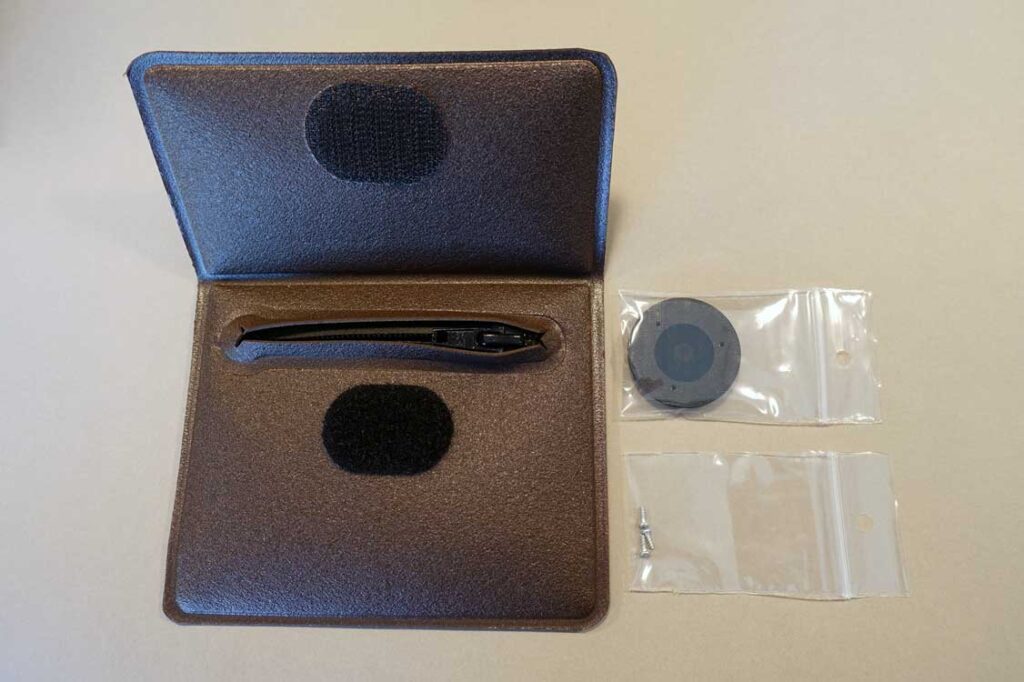
Here are the beautiful and elegant little bag, the cone with the waterproof adhesive film in the center of the hole, the three little screws used to screw the cone directly to the Pippy2 board.
And here’s how to very easily mount the cone onto the board. Simply unscrew the two screws securing the battery holder to the board itself, and gently lift the board on the side where there are two retaining pins between the battery holder and the board. Then screw the cone onto the board using the three small screws provided. Gently lower the board back into contact with the battery holder, and retighten the two retaining screws between the two elements. It’s easier said than done!
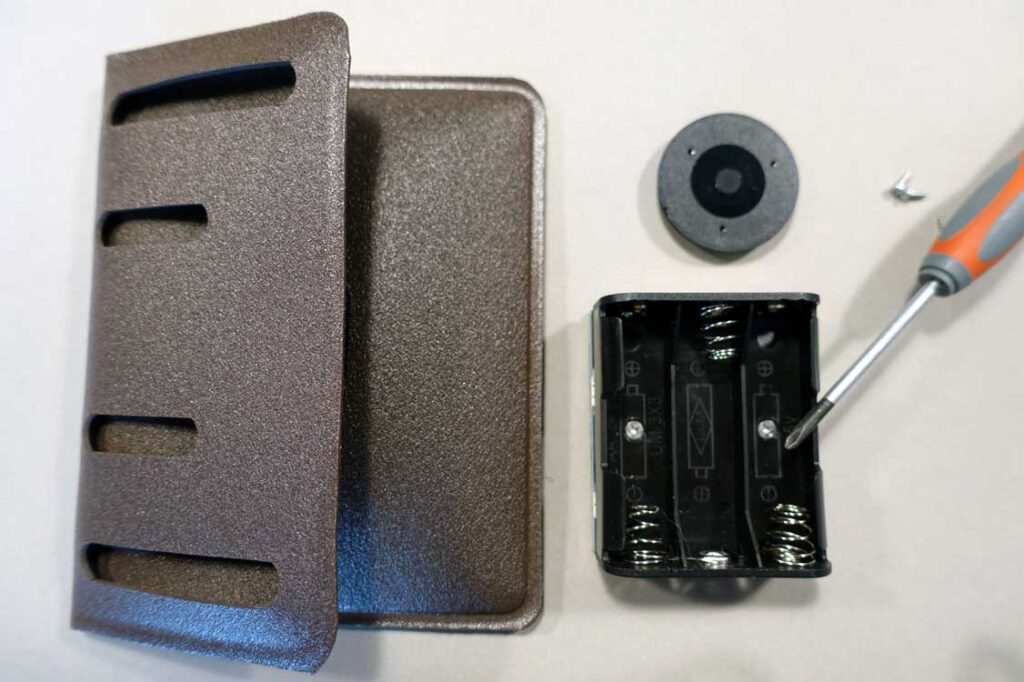
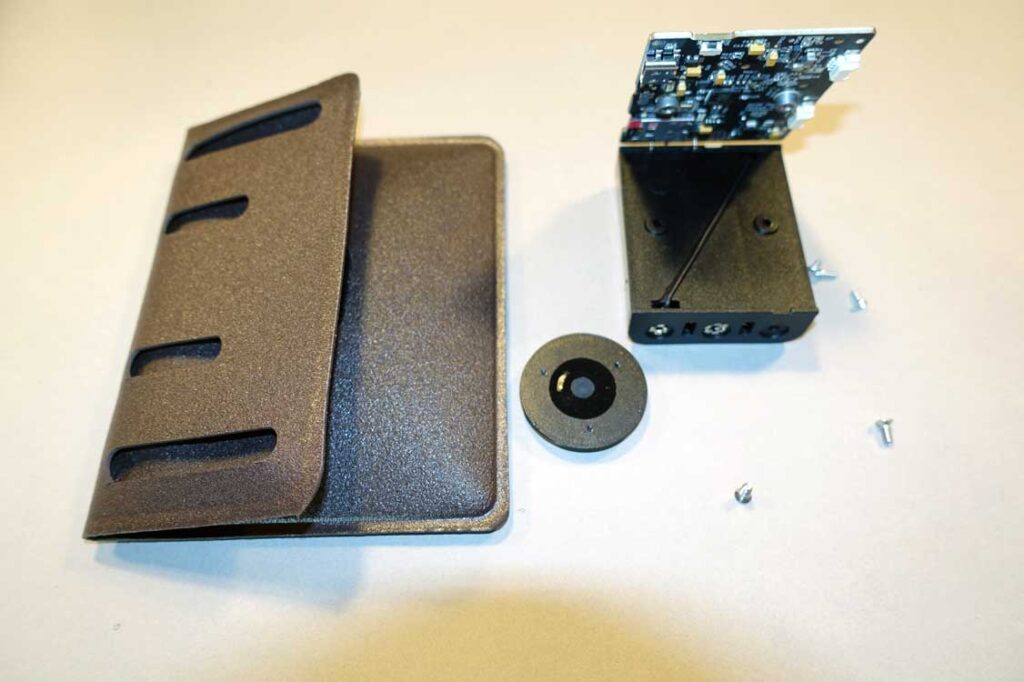
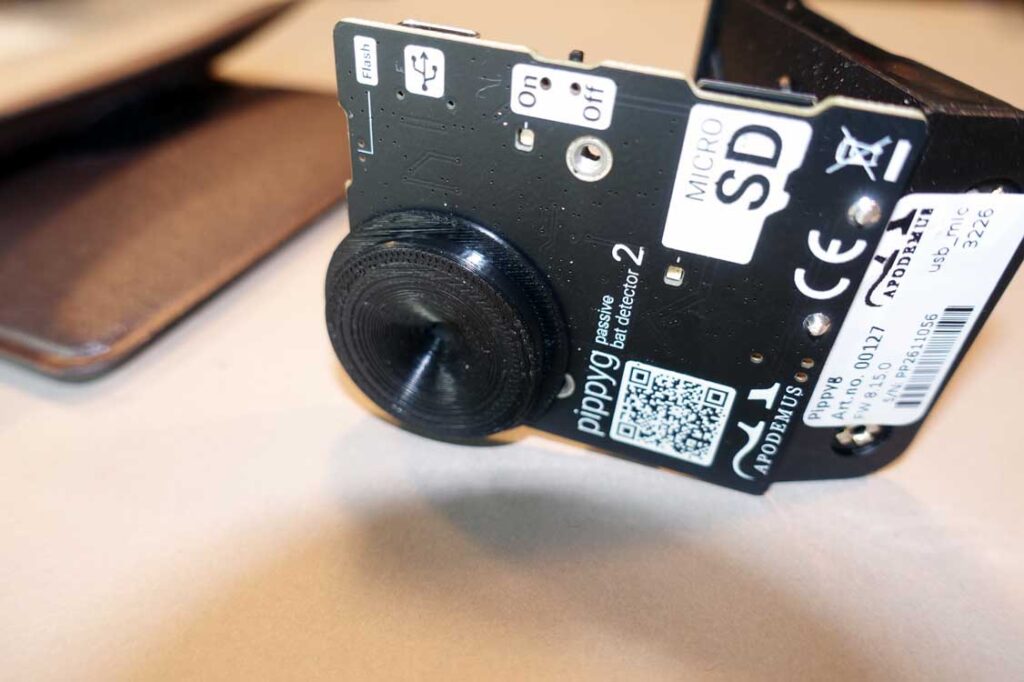
Finally, we insert the Pippyg2 with its screwed cone inside the small bag, making the cone come out of the appropriate hole (already perfectly made) and making sure it adheres well along the entire edge.
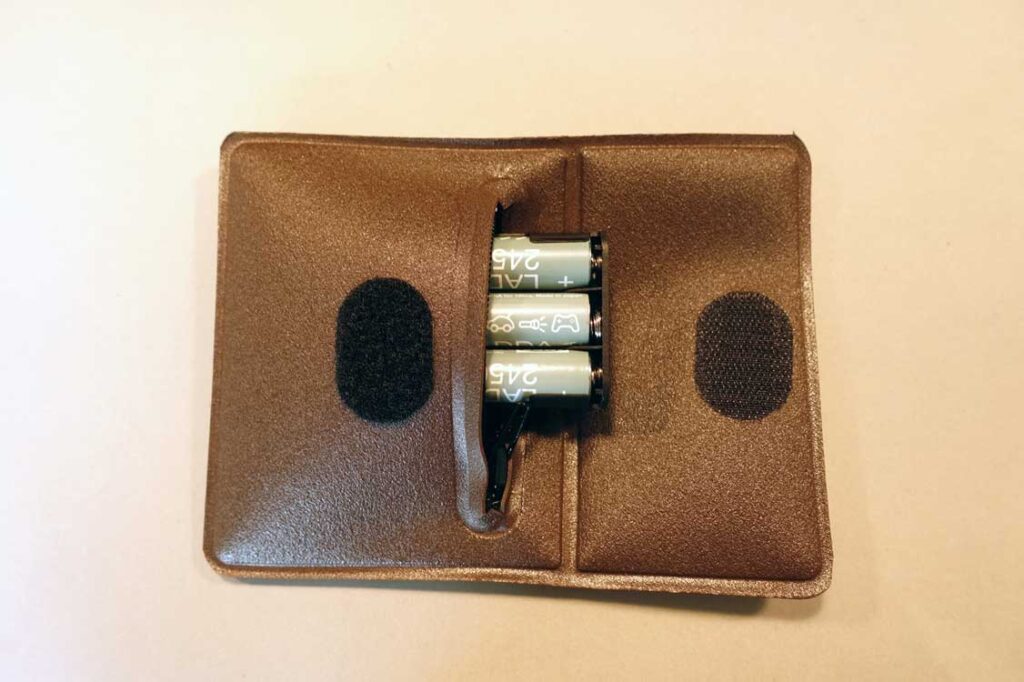
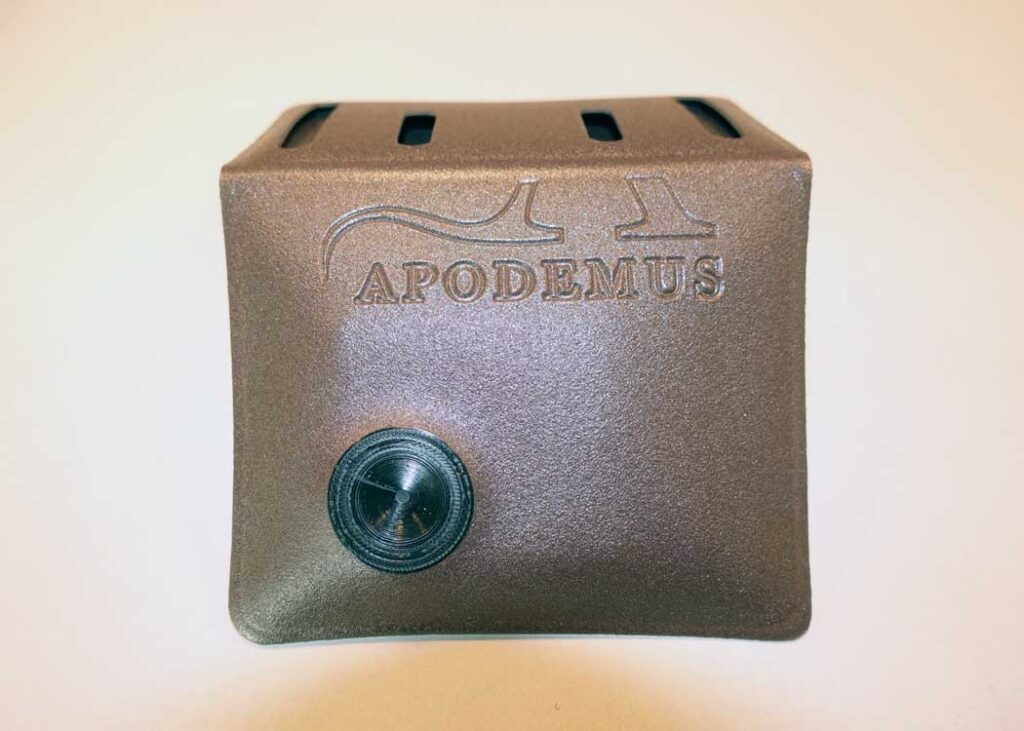
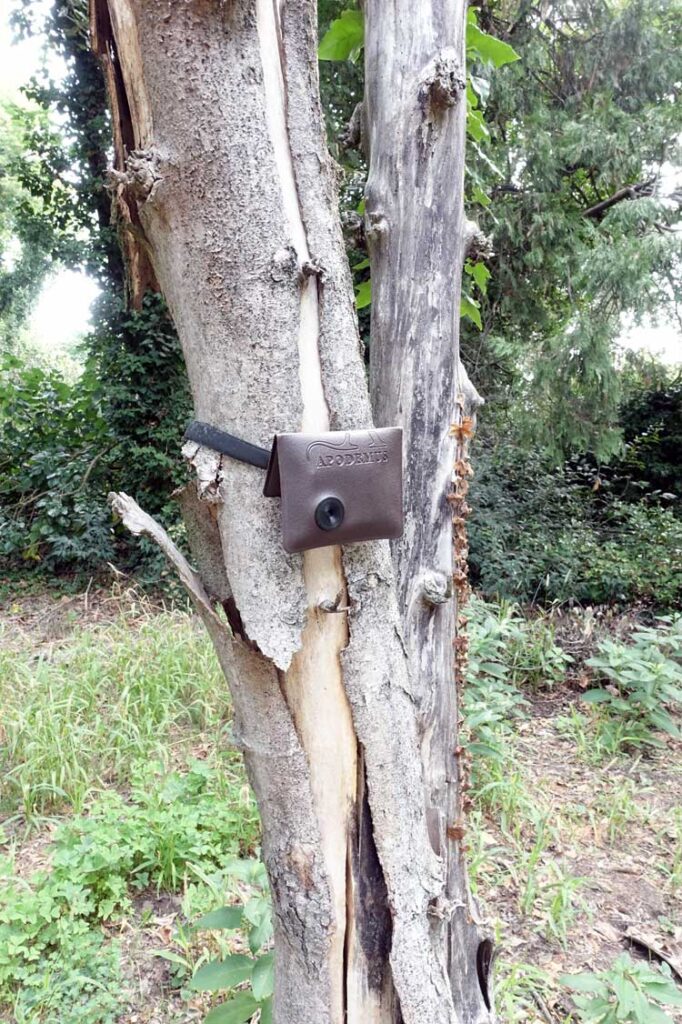
And here is finally our Pippyg2 ready for use!!!
===========================================
And now let’s test the Pippyg2 with its cone and the Waterproof sticker covering the microphone, compared first with Pippy1, then with Audiomoth.
(Waveform followed by Spectrogram)


_____________________________________________________________


_____________________________________________________________


COMMENT:
as we can see, despite the cone with the adhesive filter protecting the microphone, the signal doesn’t suffer significantly in terms of amplitude. Although a 2 dB average reduction in the signal is claimed, I have to say I haven’t noticed any particular difference compared to using it without the cone. So, the fact that it can be used without any significant signal decay is a welcome development.
All the six images above comes from Audition printscreen.
======================================================
Final comment after a direct comparison between the Pippyg2, Pippyg (first version), and partly also Audiomoth.
The signal with Pippyg2 is 2 to 3 dB higher than the first version of Pippyg.
The spectrograms obtained, both from the Pippyg2 and the first version of the Pippyg, are much cleaner than those obtained with Audiomoth set to minimum sensitivity (setting Audiomoth to higher sensitivity levels results in excessively “dirty” spectrograms and therefore not comparable to the clean ones from the two Pippygs).
In the audible range, the quality obtained with the new Pippyg2 is decidedly higher, even for speech, so it is particularly impressive with bird songs and calls, and even amphibian calls in general.
So, full marks for the new Pippyg2!
===================================================
===================================================
In this final section I will include some recordings to support the above review
(so… works in progess!).
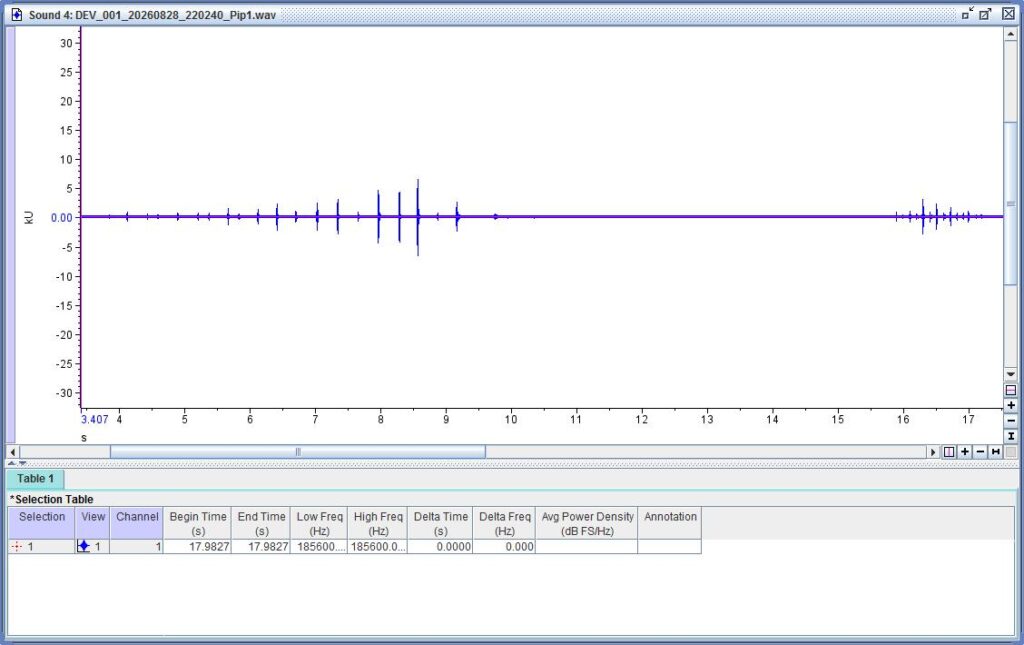
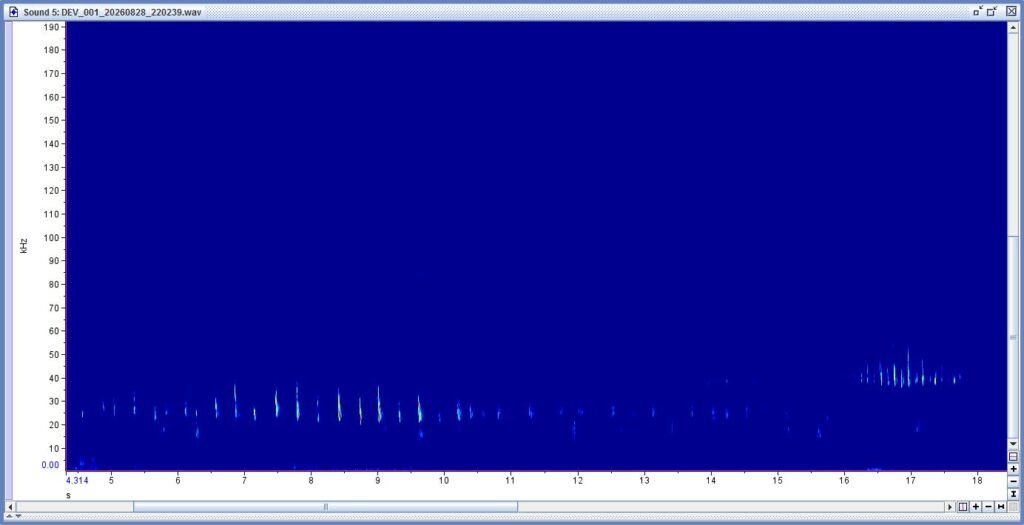
One last bat recording: Pippyg2 – Nyctalus leisleri + Pipistrellus kuhlii waveform + Spectrogram
__________________________________________________________
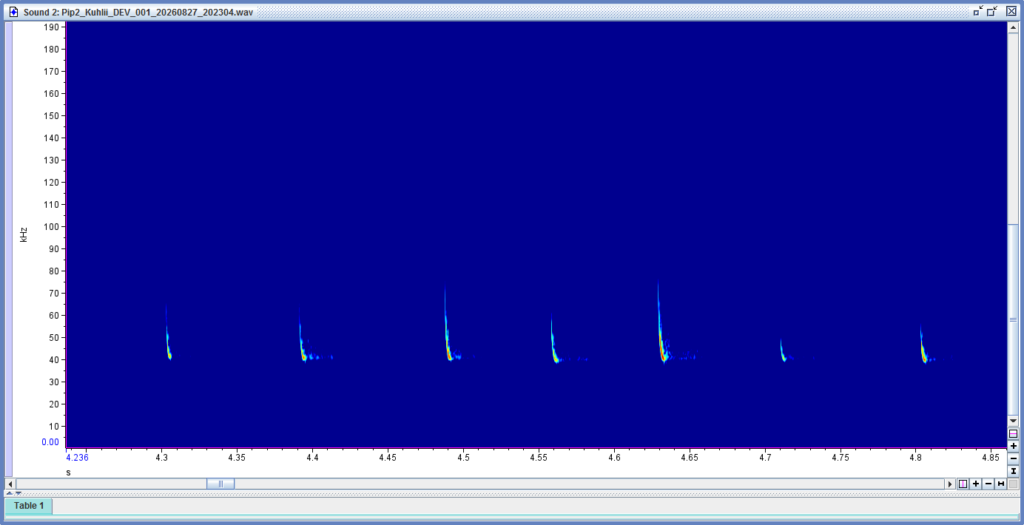
Pippyg2 – This is a Spectrogram window obtained from Raven Lite with part of the Pipistrellus kuhlii ecolocation signals, perfectly clean without any signal splitting.
____________________________________________________
Commenti recenti